
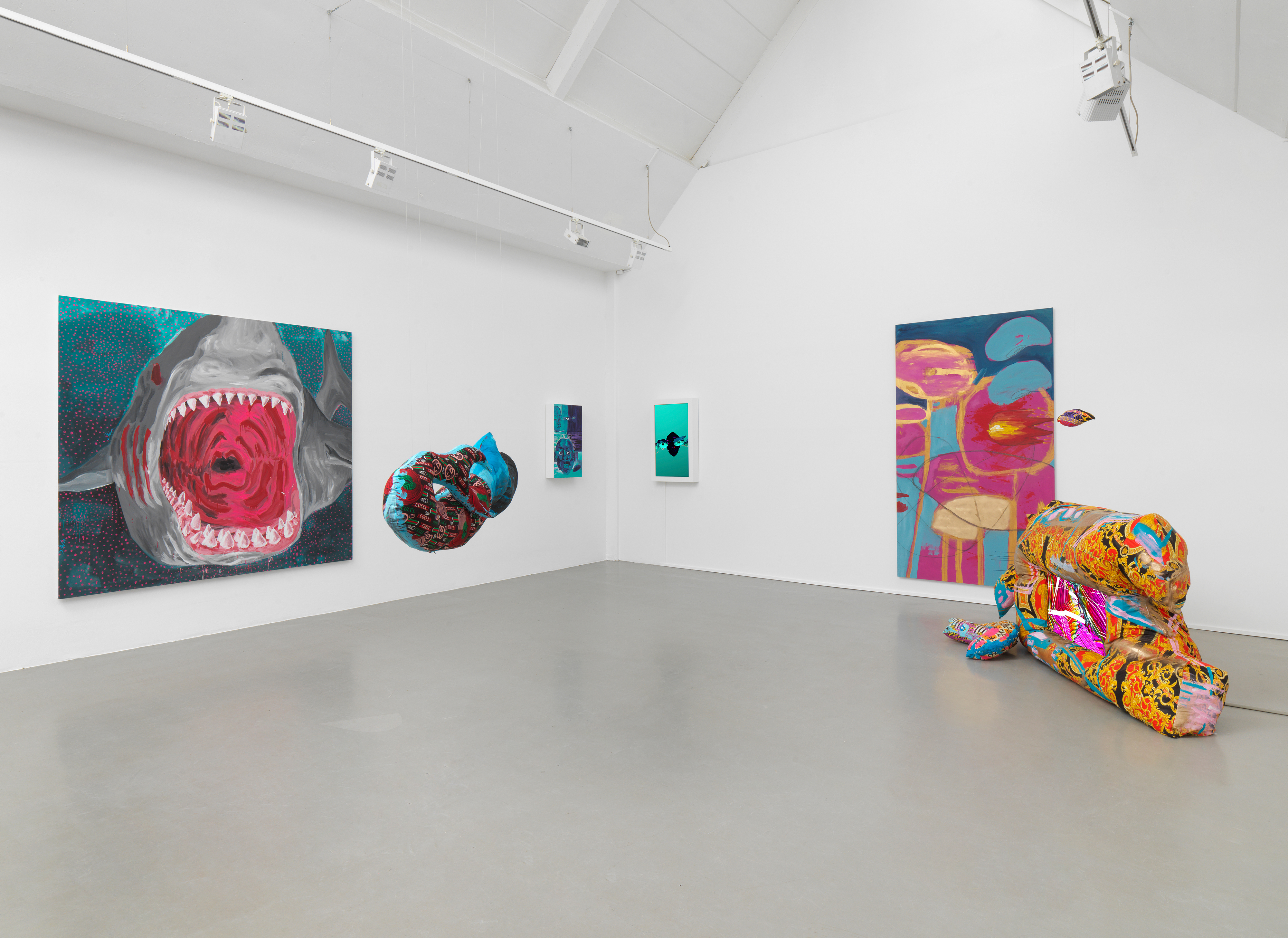
\Mukenge/SchellhammerForward flight – Flucht nach vorn02.03. - 20.04.2024
Christ Mukenge, *1988 in Kinshasa, Kongo and Lydia Schellhammer, *1992 in Konstanz, Germany.
The duo live and work in Berlin and Kinshasa.
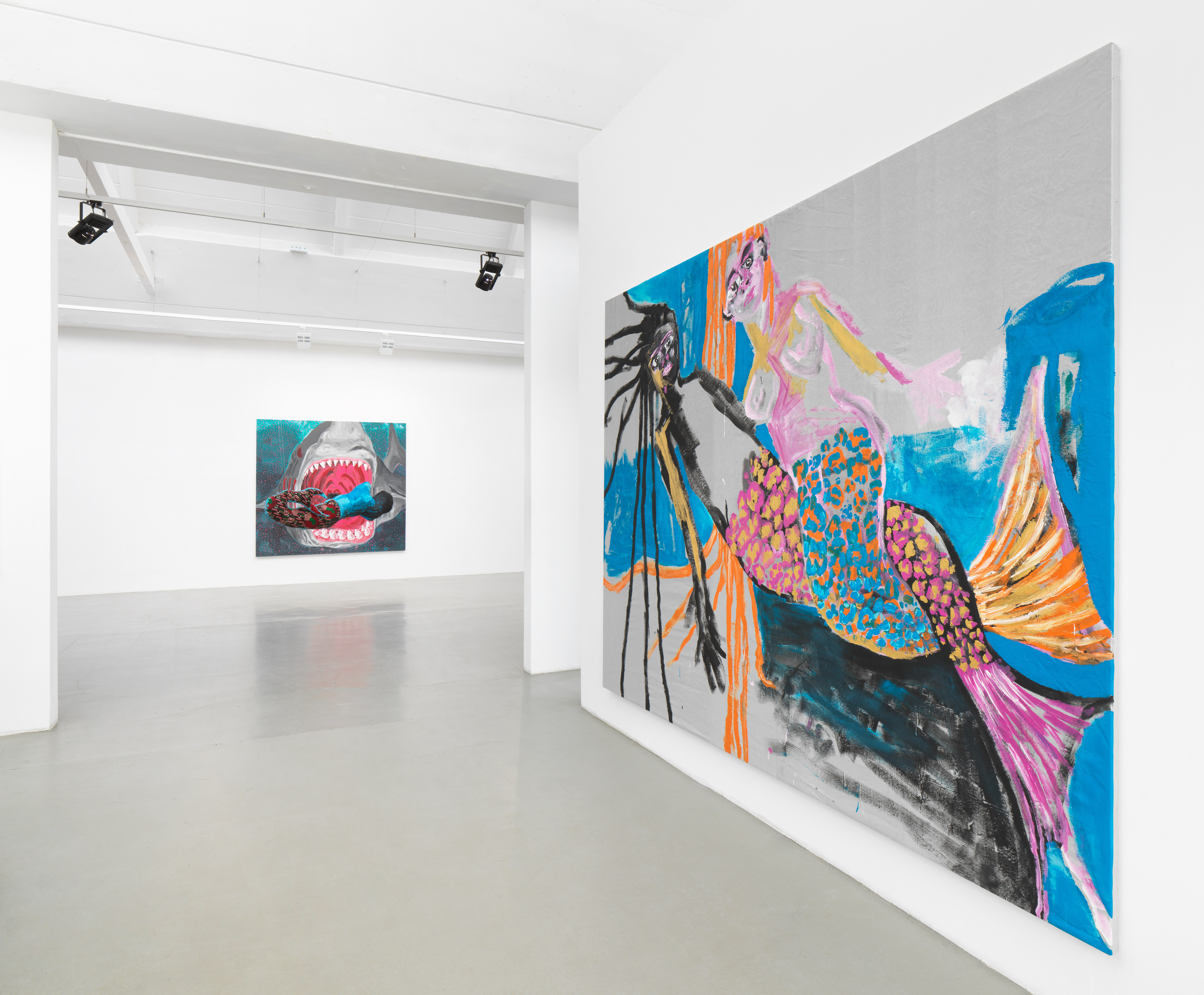

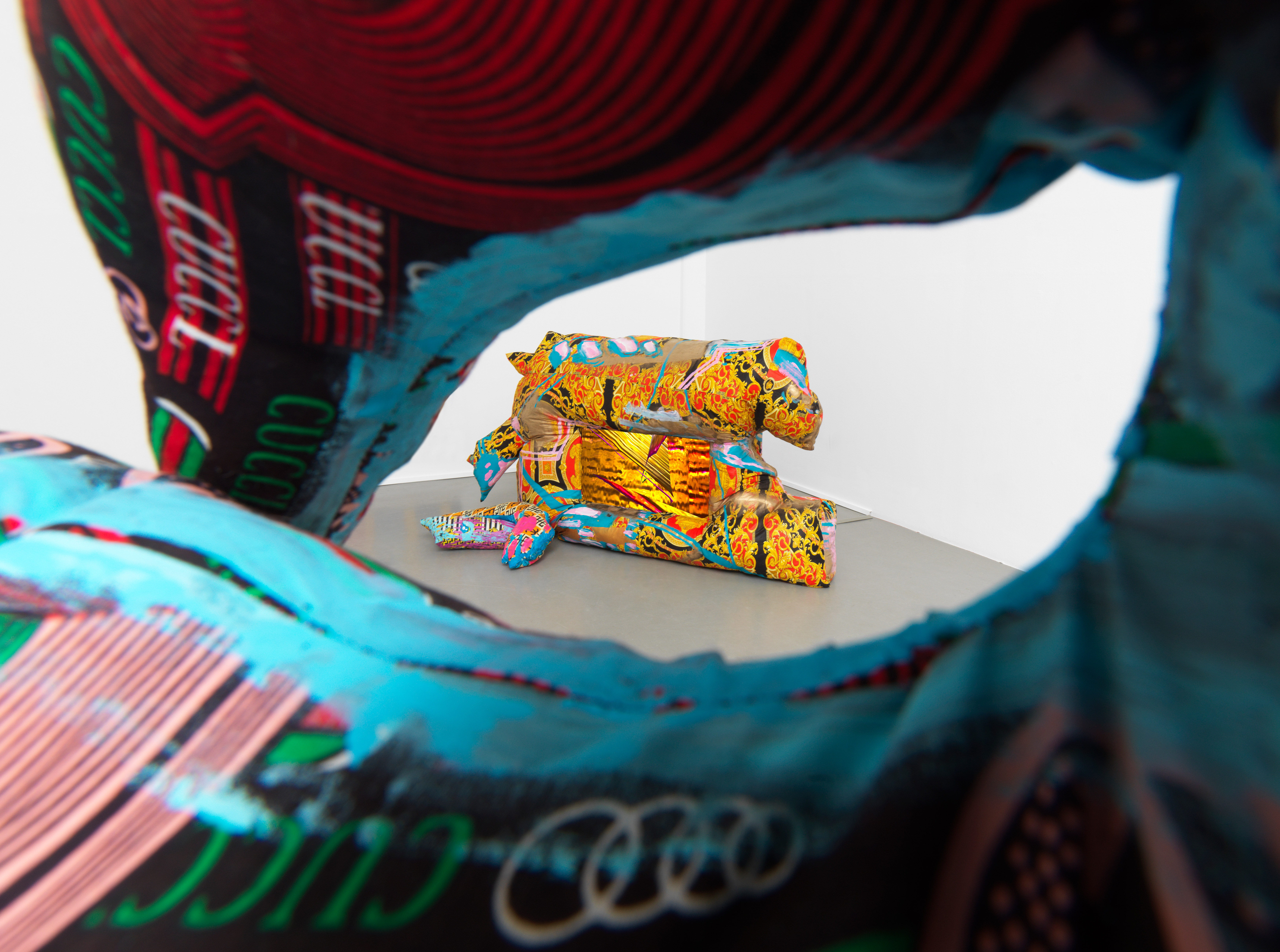




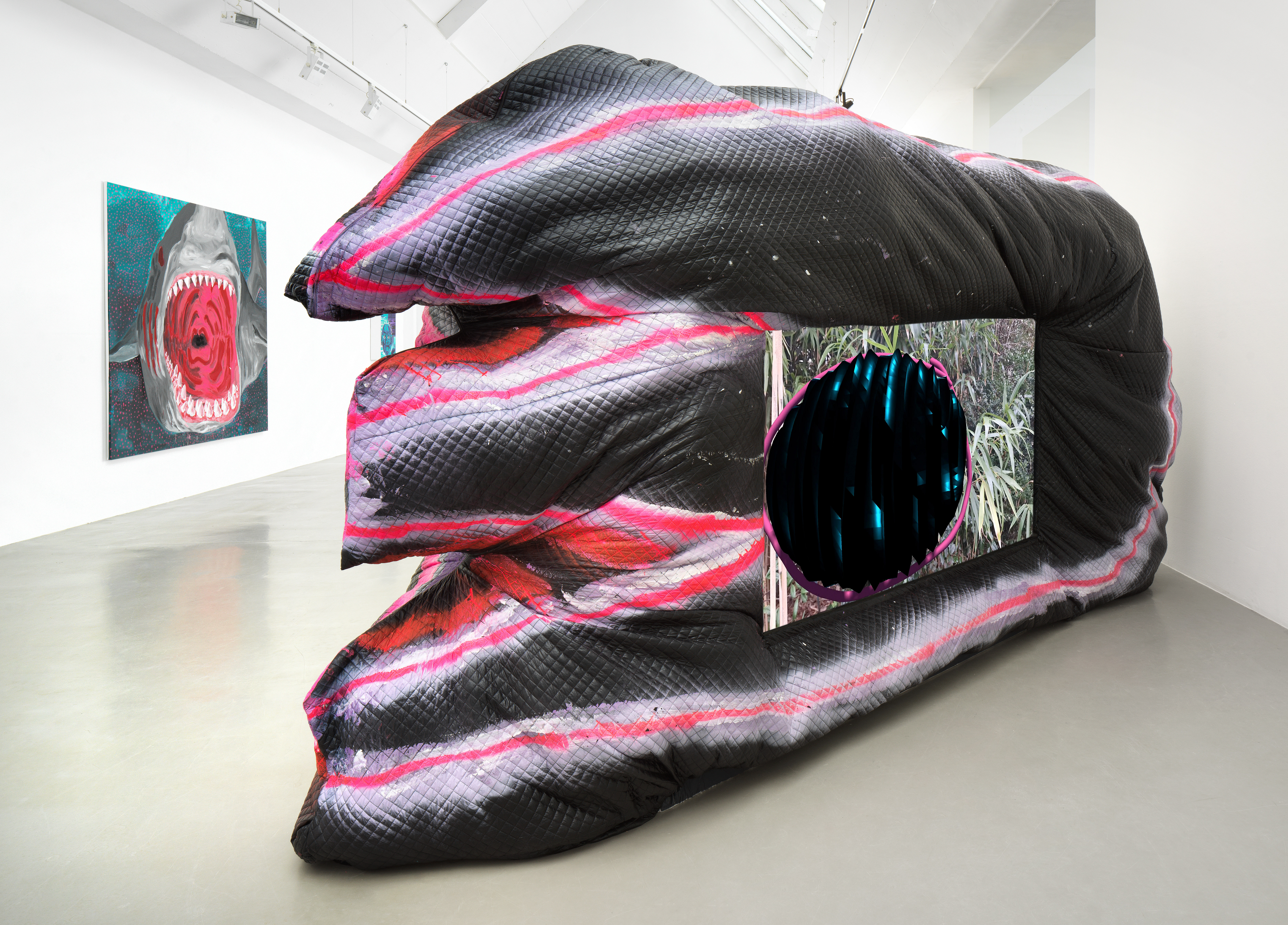

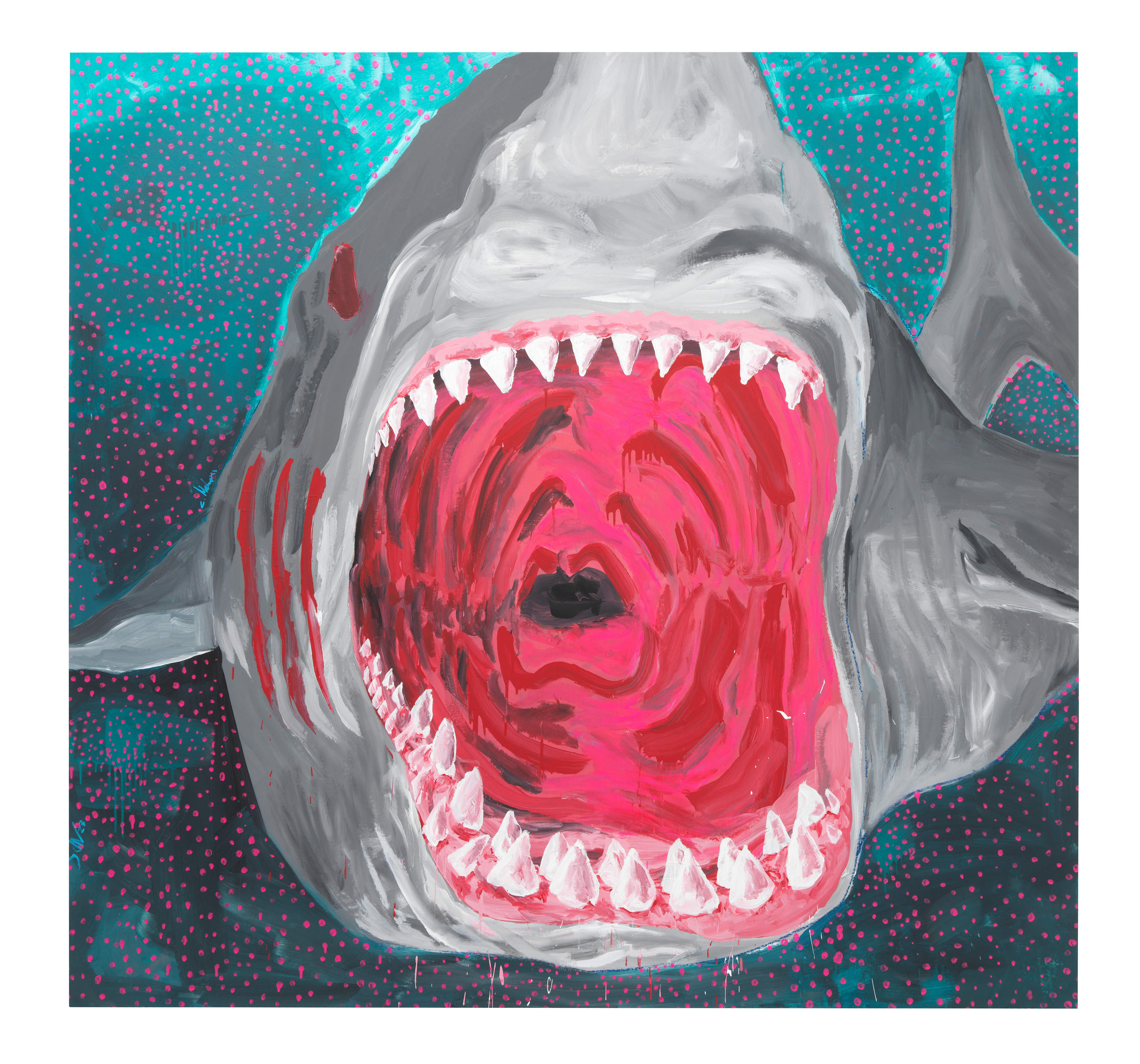
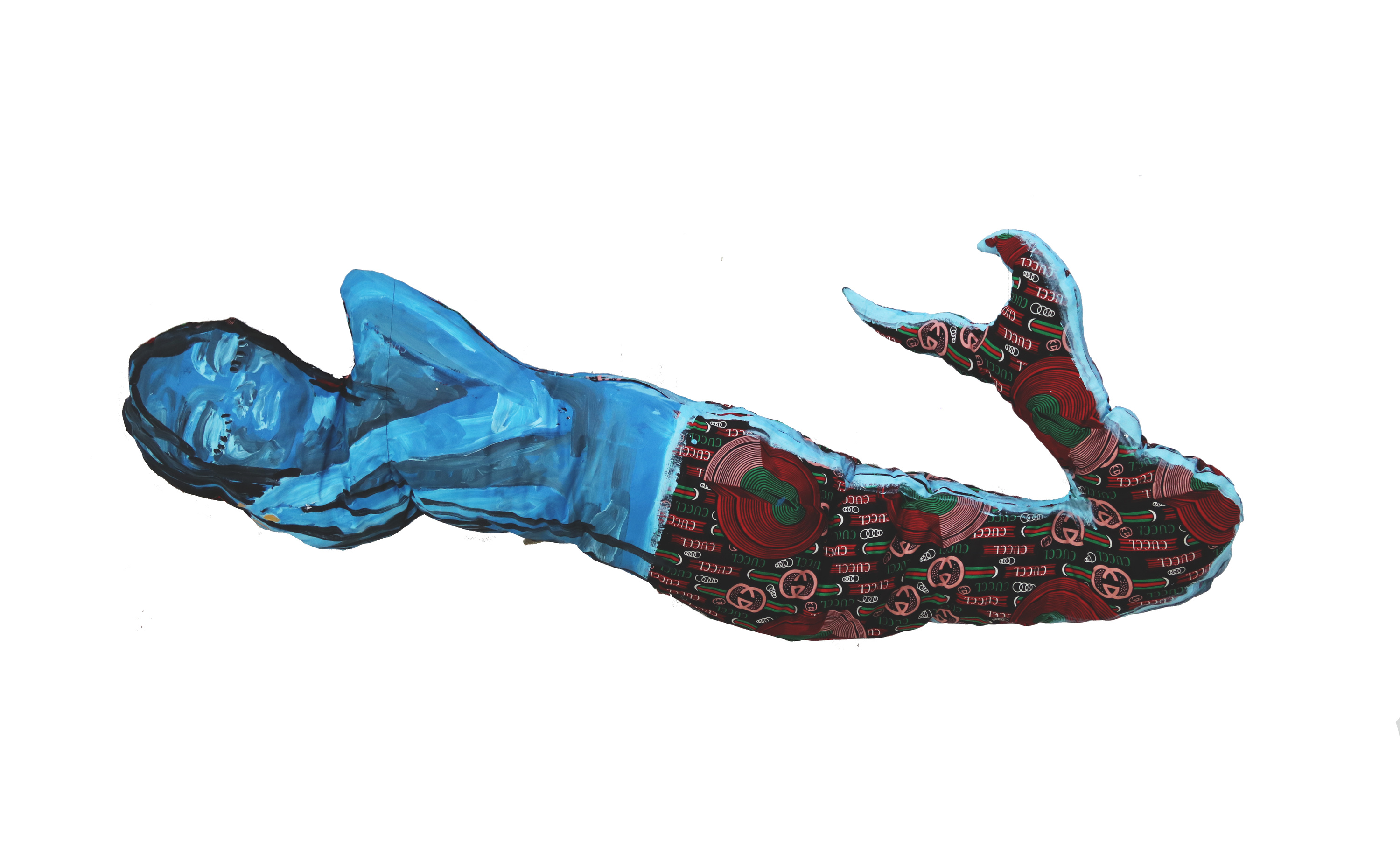
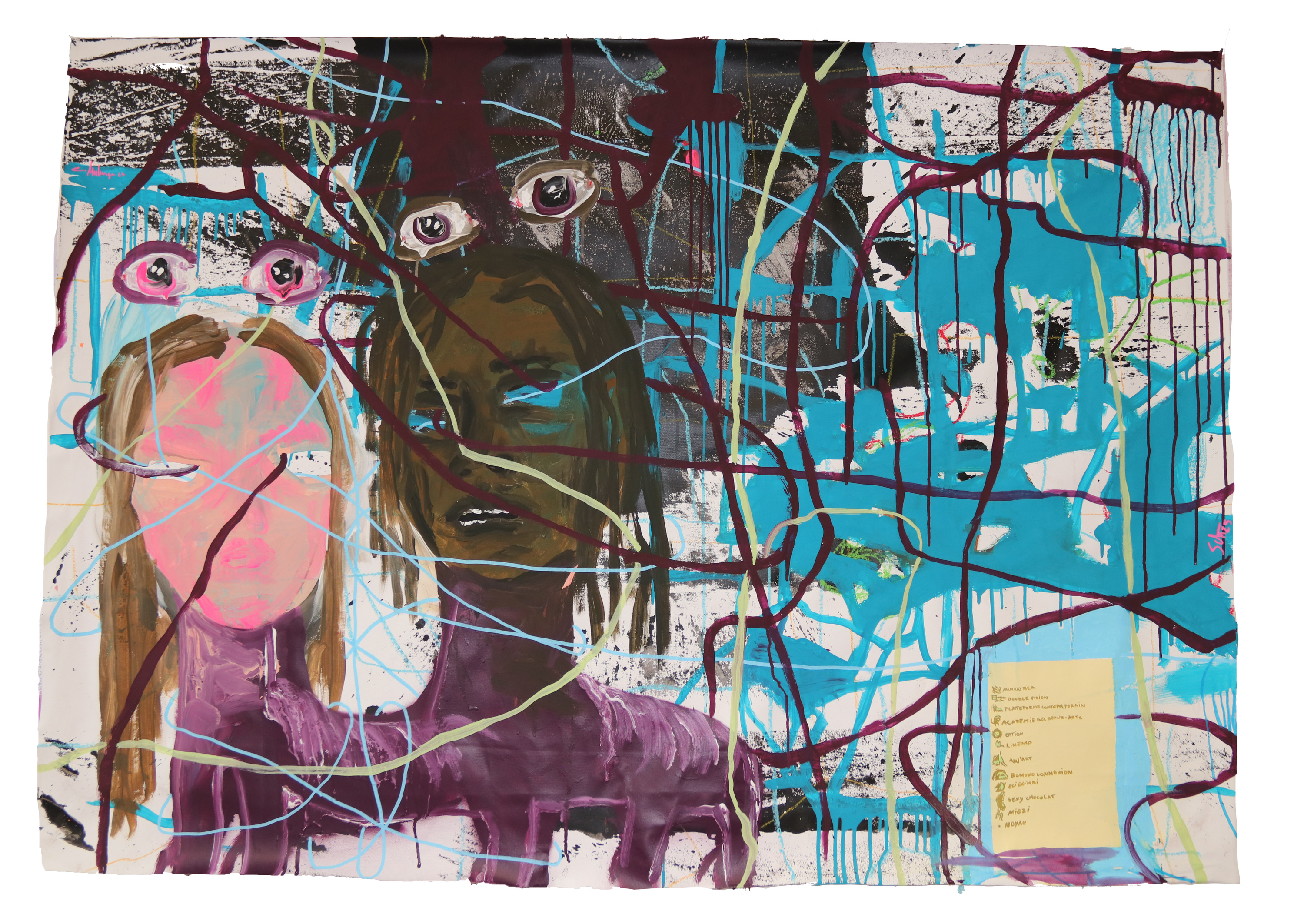
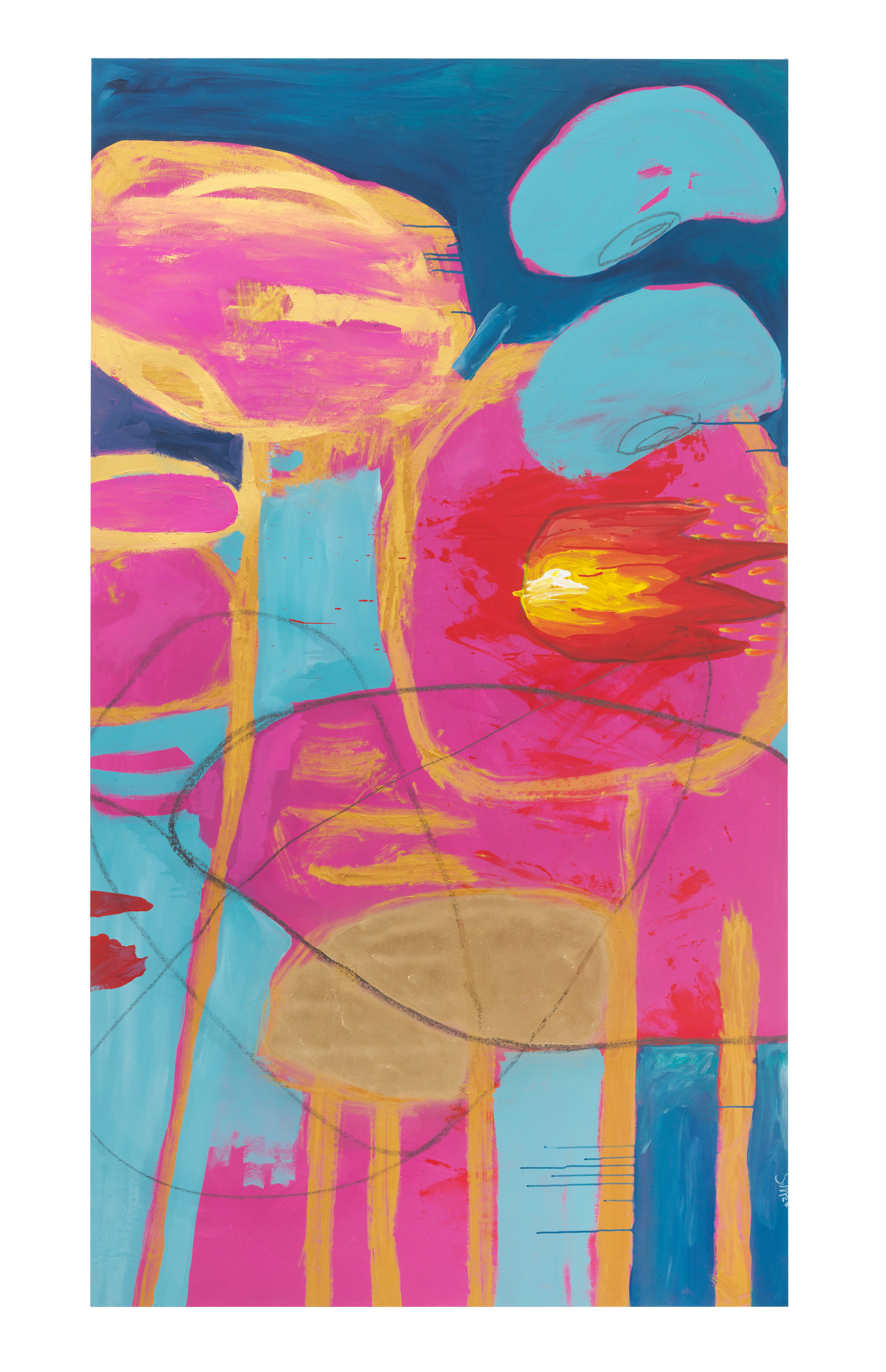
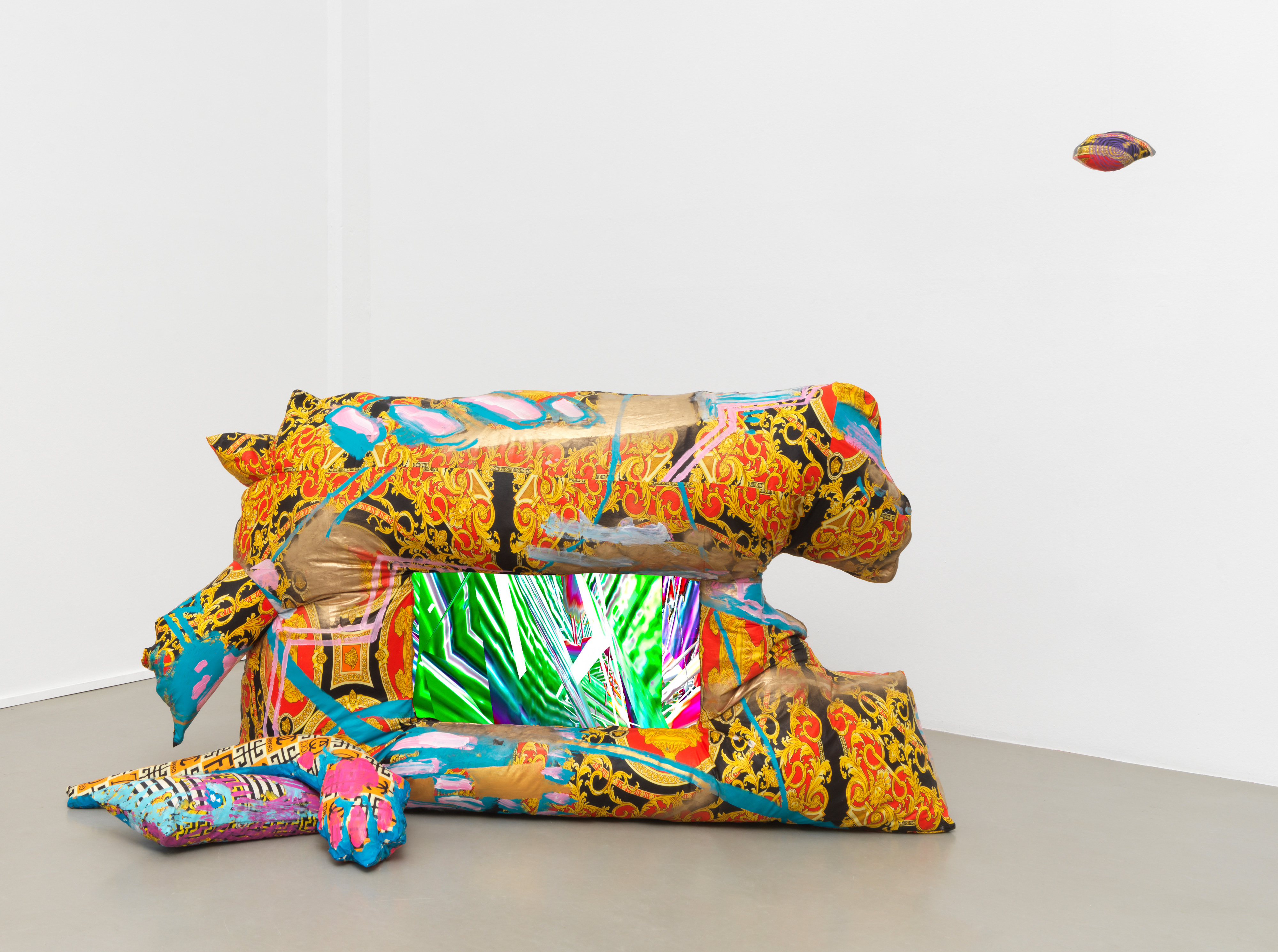
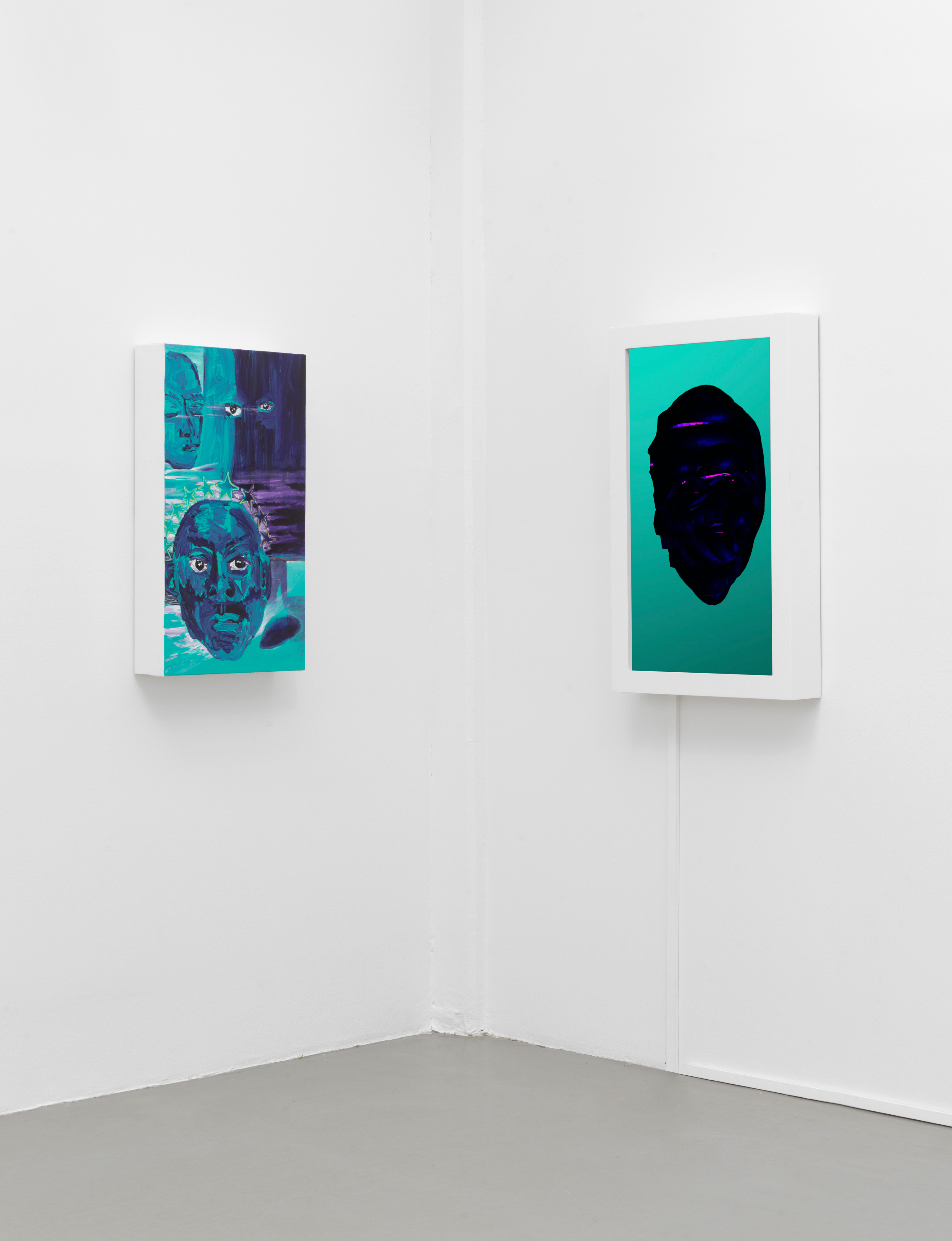
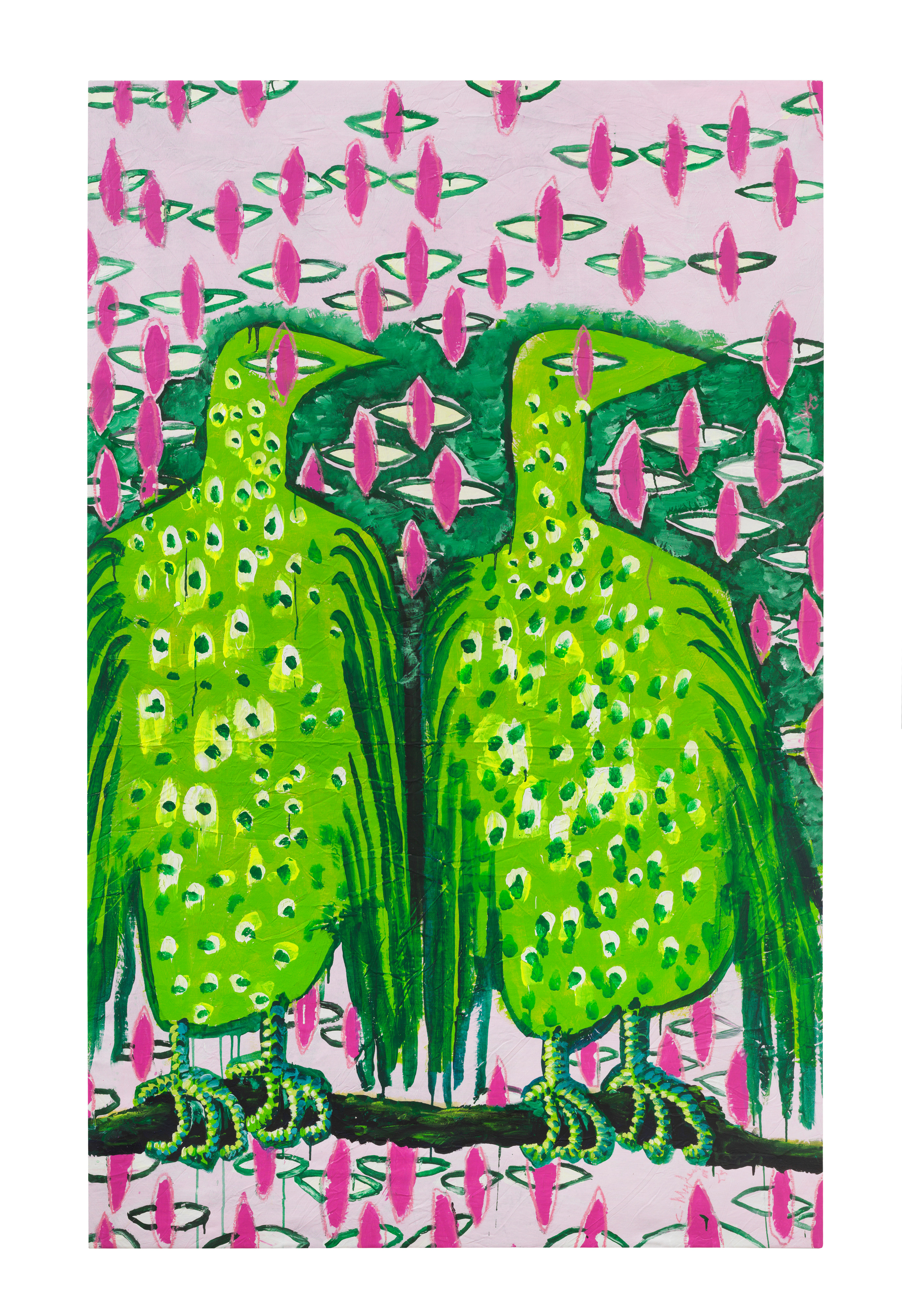
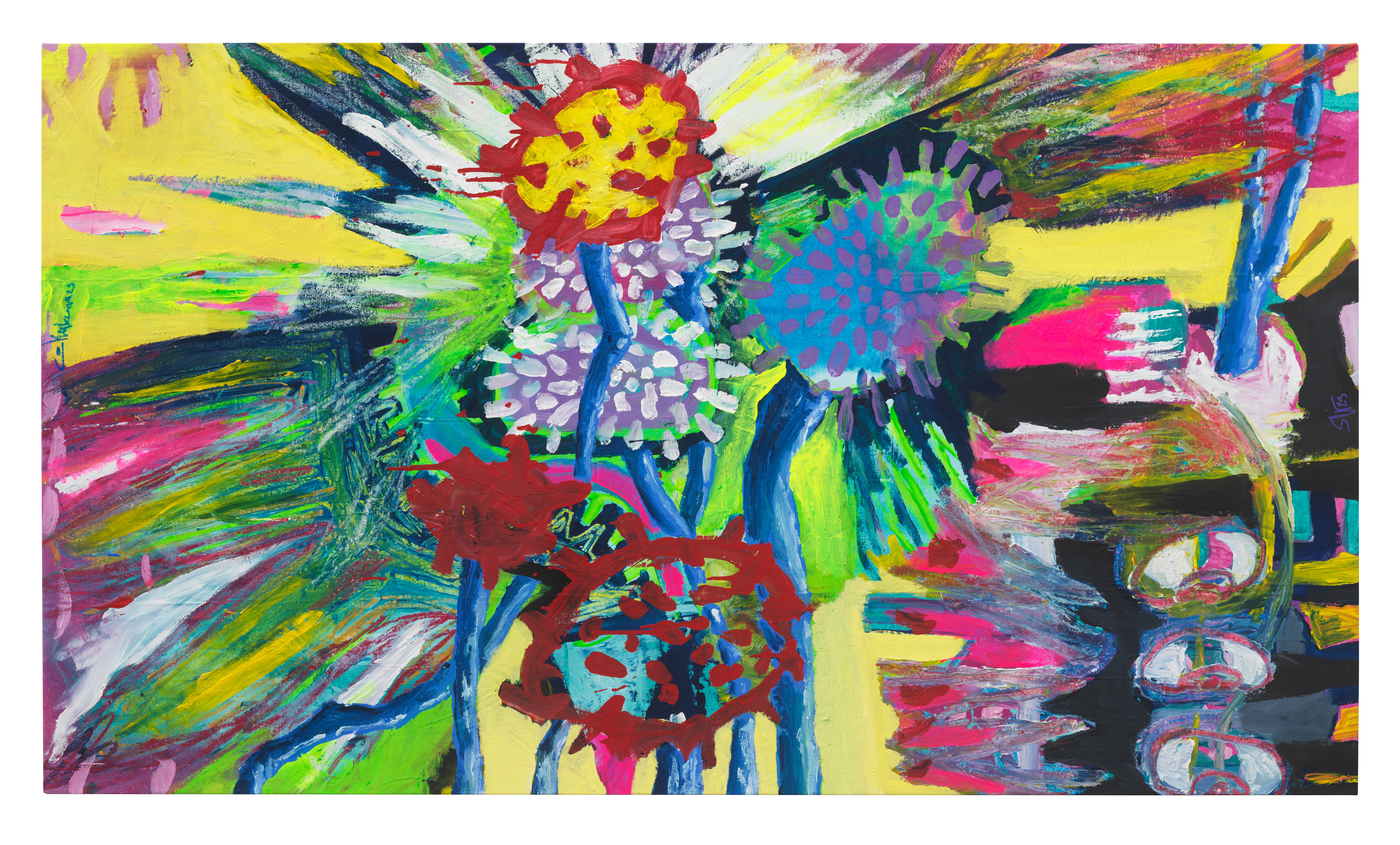
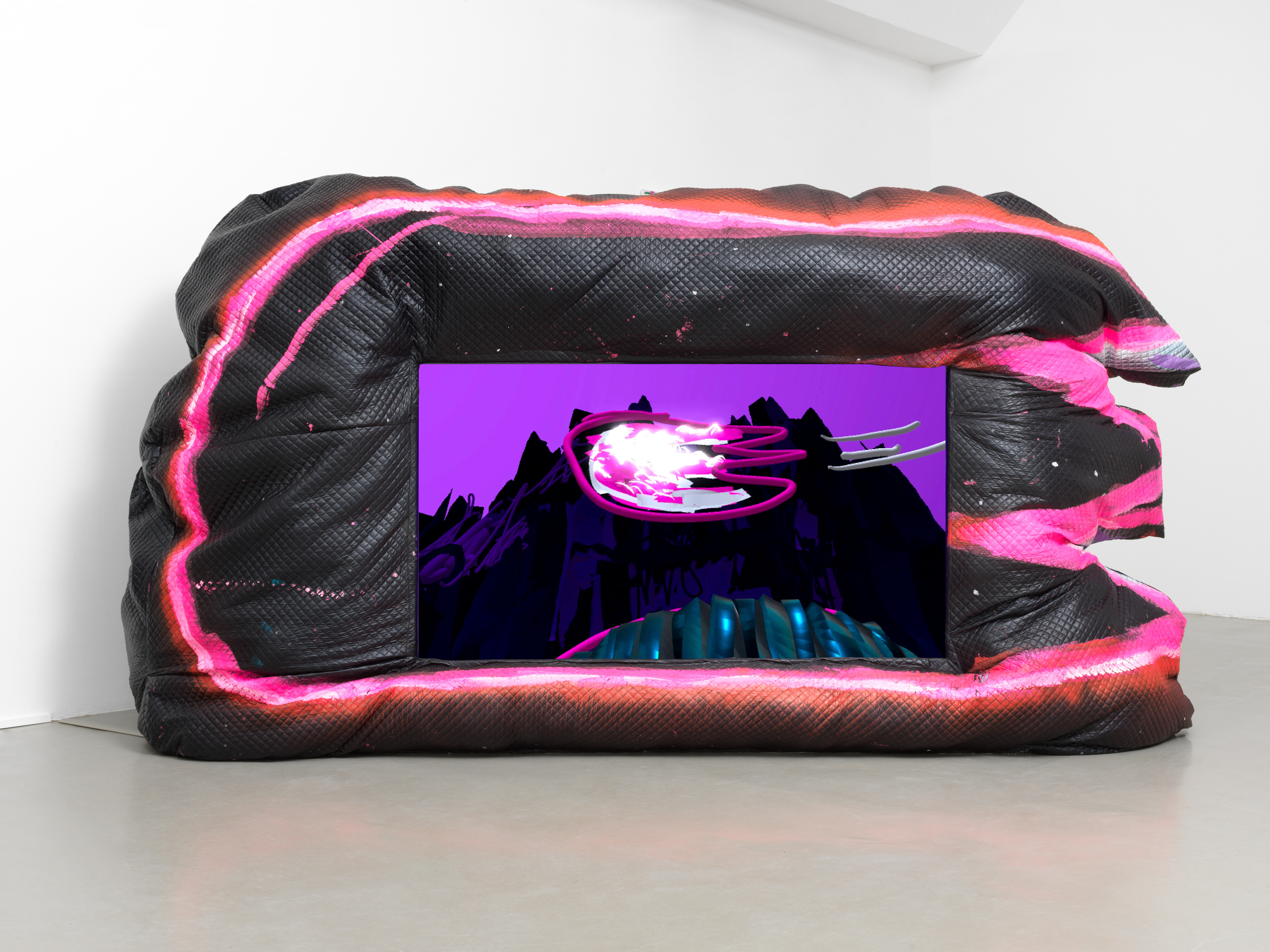
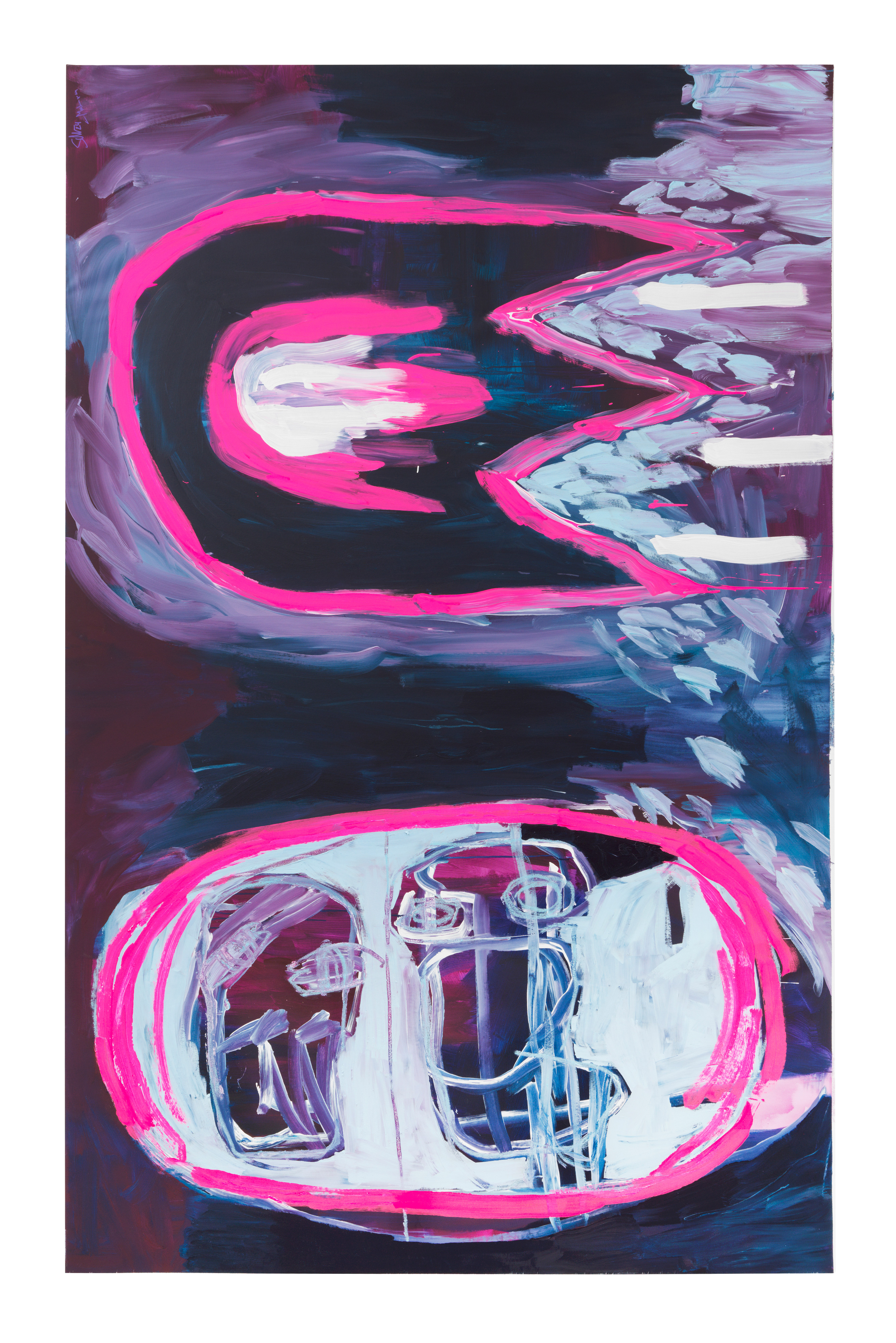
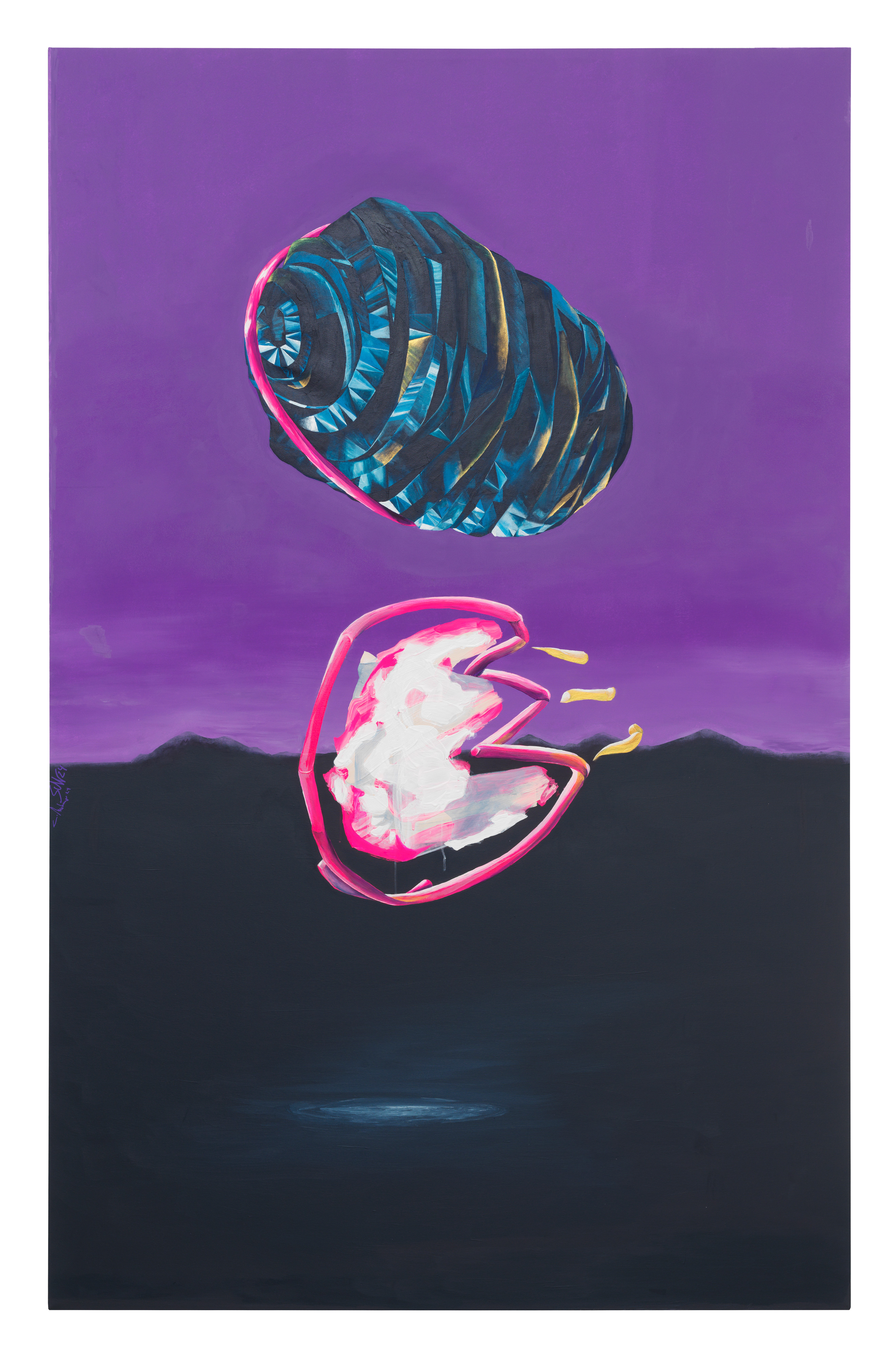
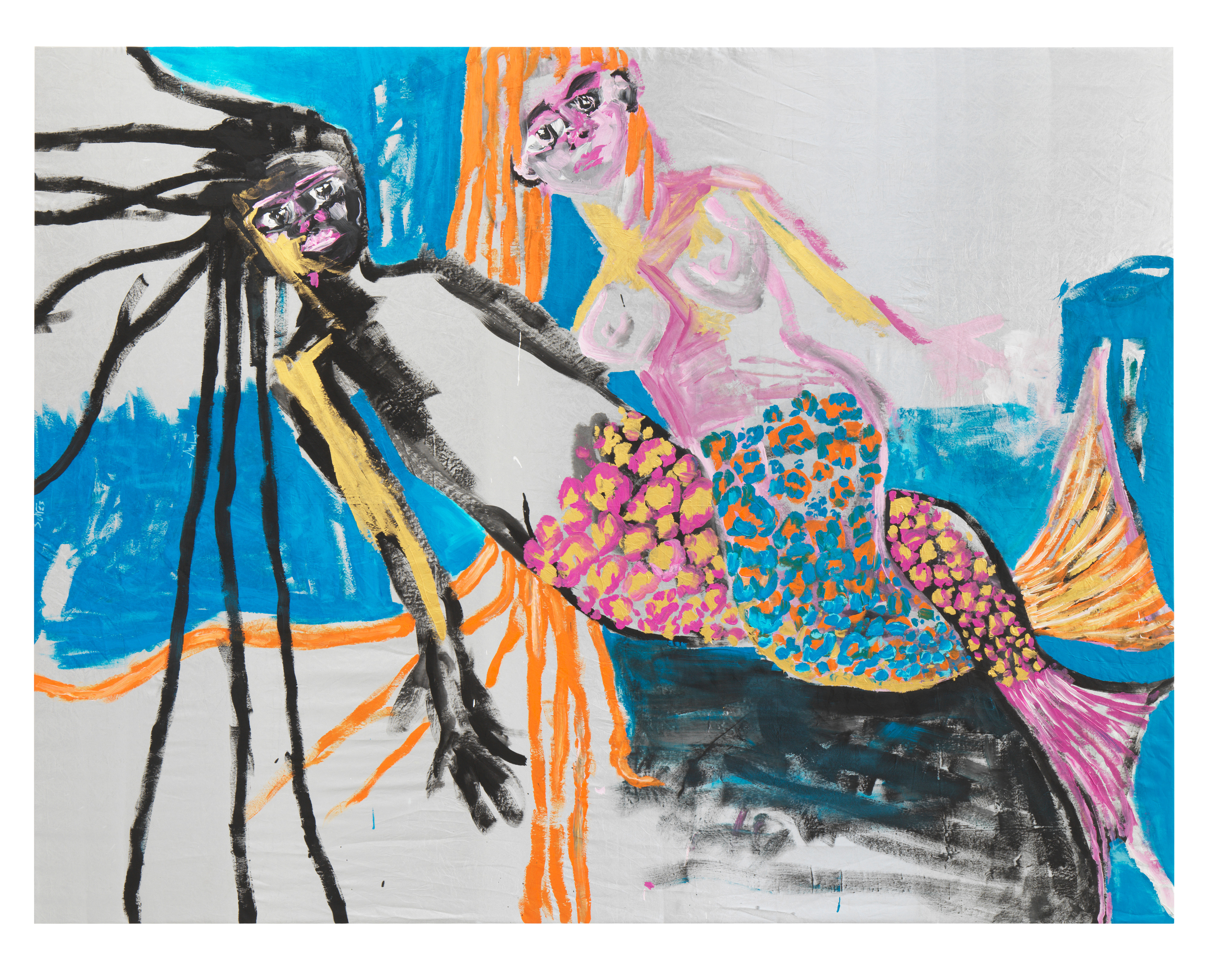
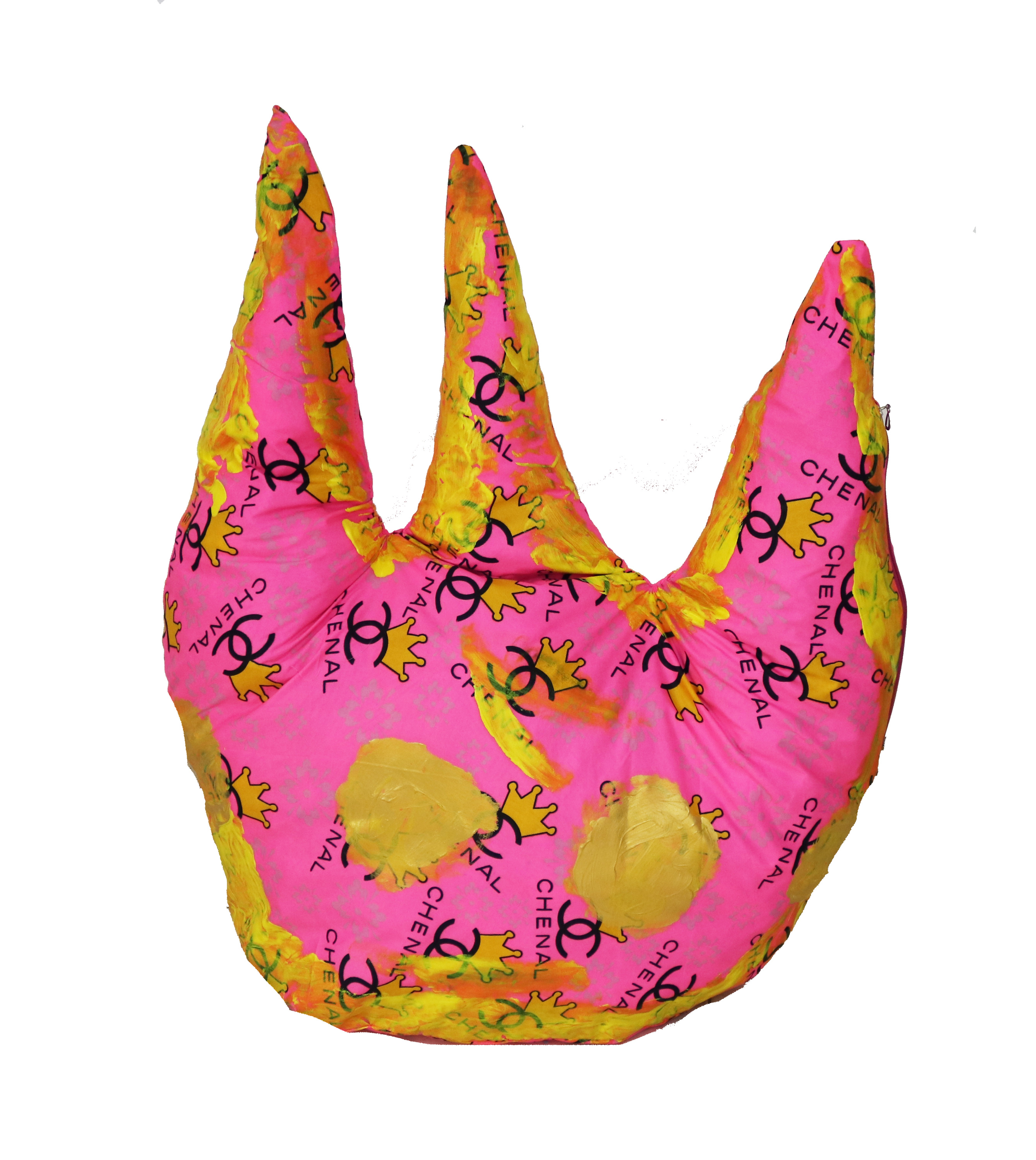
Image: Digital Collage by Mukenge/Schellhammer combining Acrylics on canvas, acrylics on congolese wax fabric filled with absorbent cotton, digital drawing, Berlin 2024
Forward flight – Flucht nach vorn – is a German idiom that denotes a moment of danger or impossible retreat in which the only solution is to throw oneself headfirst into the threatening situation. With one’s back against the wall, the only way out is to flee forward.
„Forward Flight“ is the third part of a series of works on contemporary mythologies. After the first chapter „Barking dogs in the head“ (Kinshasa, 2022) and the second chapter „Undigested Images“ (Berlin and Stuttgart, 2023), the third part tells the mythical genesis of that strange creature Mukenge/Schellhammer itself. Forward Flight is a classic monomyth, a hero’s journey.
Read more3D Tour
Performance
Exhibition Views



Selected Works
Mukenge/Schellhammer
60 x 170 x 25 cm
Mukenge/Schellhammer
112 x 158 cm
Mukenge/Schellhammer
248 x 139 cm
Mukenge/Schellhammer
108 x 186 x 42 cm
Mukenge/Schellhammer
Video: 4:02 min
dimensions variable
Mukenge/Schellhammer
dimensions variable
Mukenge/Schellhammer
107 x 190 cm
Mukenge/Schellhammer
214 x 340 x 110 cm
Mukenge/Schellhammer
190 x 300 cm
Mukenge/Schellhammer
300 x 190 cm
Mukenge/Schellhammer
230 x 300 cm
Mukenge/Schellhammer
35 x 25 x 15 cm

\George Bolster200 Billion Suns02.03. - 20.04.2024
George Bolster ( *1972) lives and works in New York, USA and Cork, Ireland
As a species, we are living through successive revolutions, initially through the internet, and now the rise of AI, simultaneously, with the James Webb Telescope the physics of the cosmos has to be completely reevaluated.
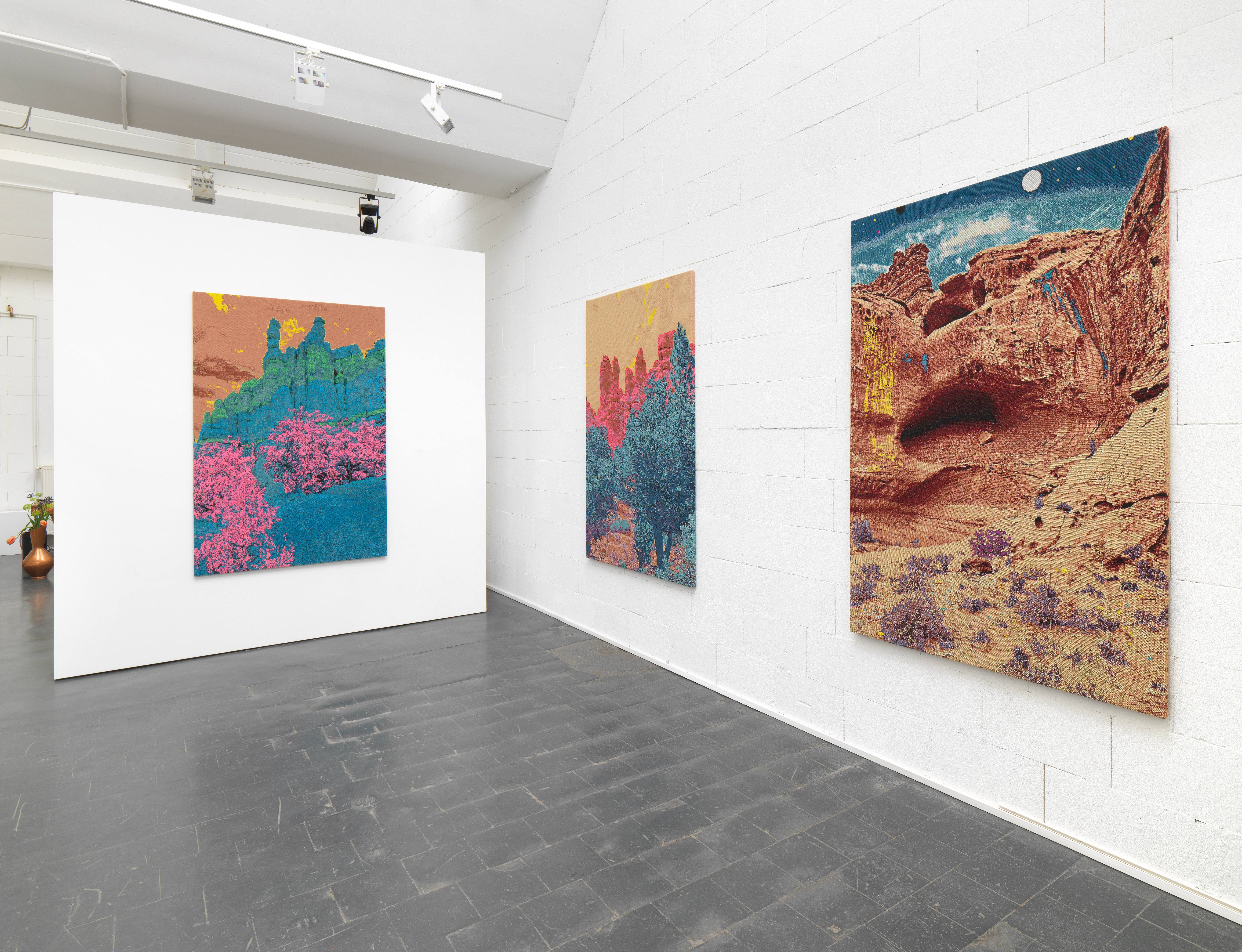

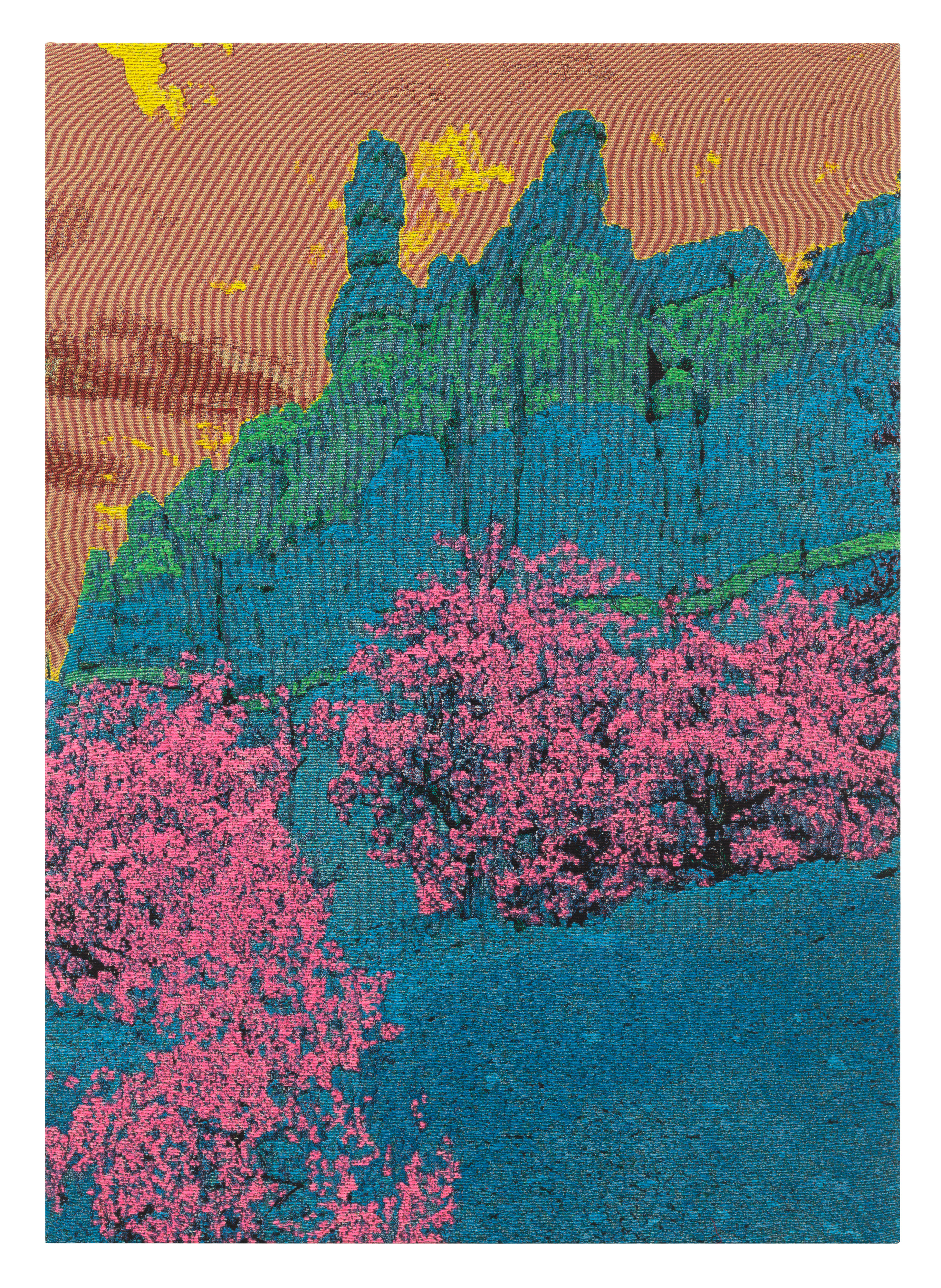
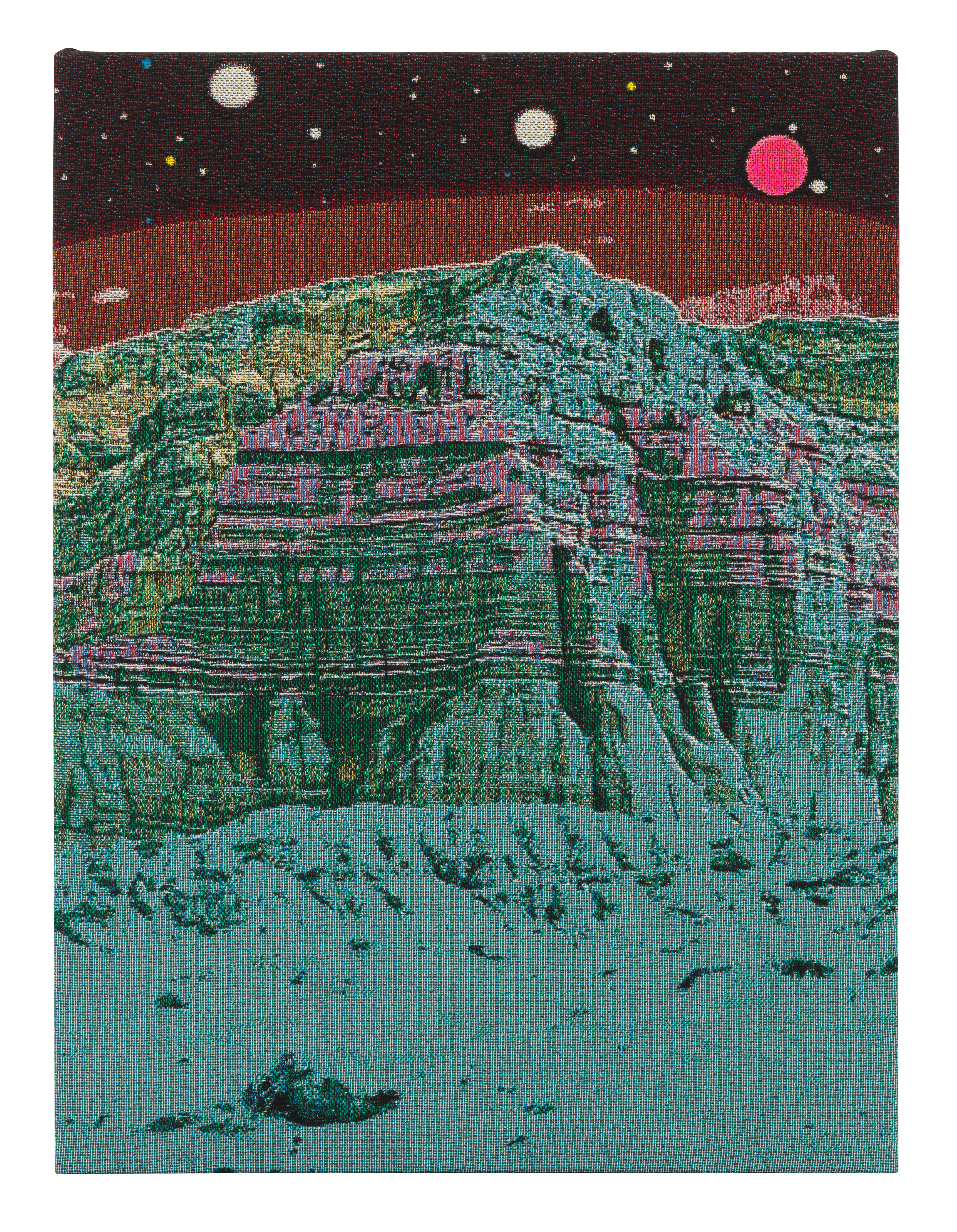
We now know that the Big Bang was not the first, and that seven hundred and seventeen galaxies are now newly observable. Bolster’s wonder at these successive life altering sets of circumstances gives full rein to his singular speculative fictitious versions of geographical depictions of exoplanets. Each work encompasses numerous processes both analogue such as painting, embroidery, and debroidery; and digital through different image augmentation and digital drawing processes.
Read more3D Tour
Exhibition Views
Selected Works
George Bolster
200 x 149 cm

George Bolster
59 x 79 inches
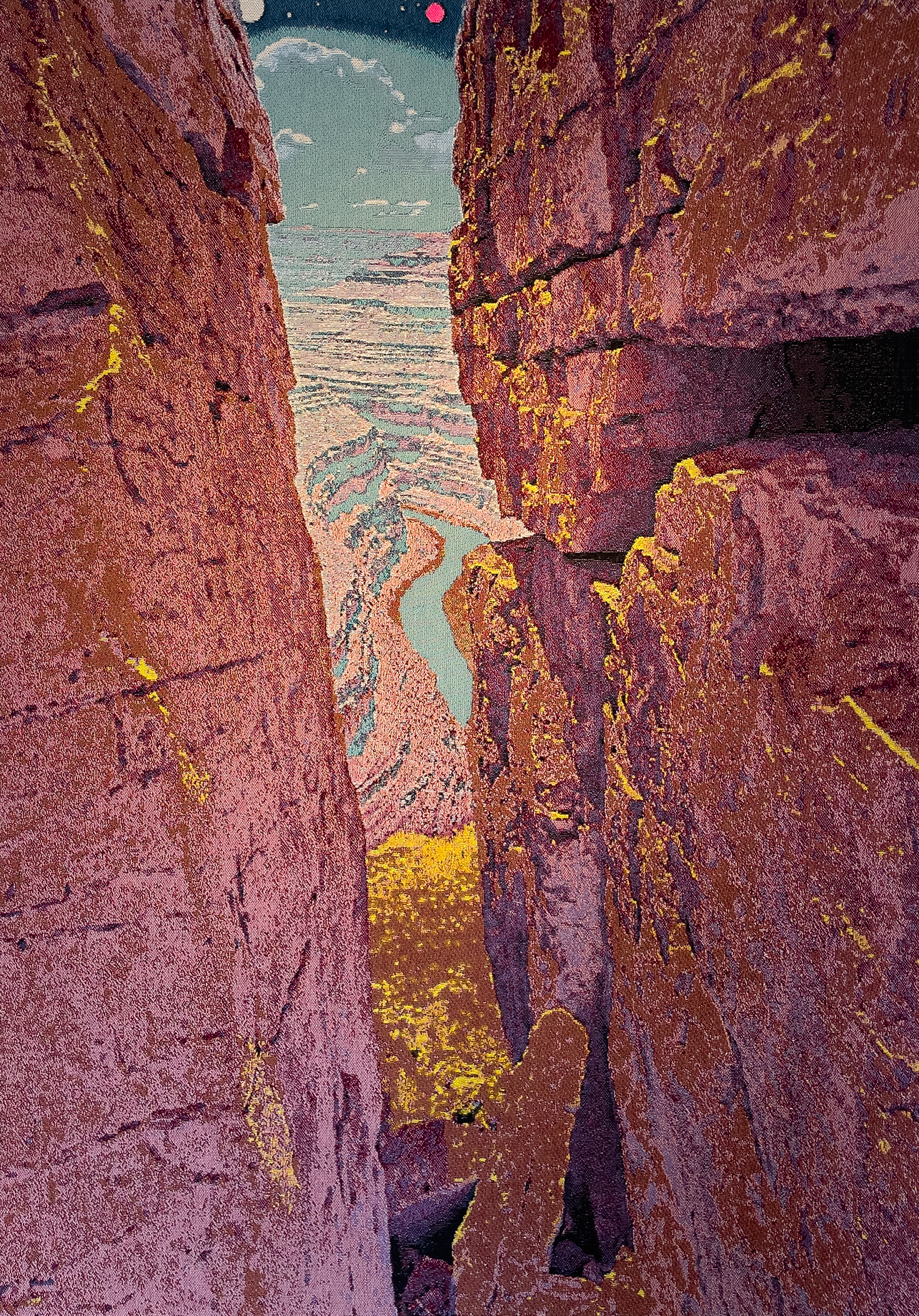
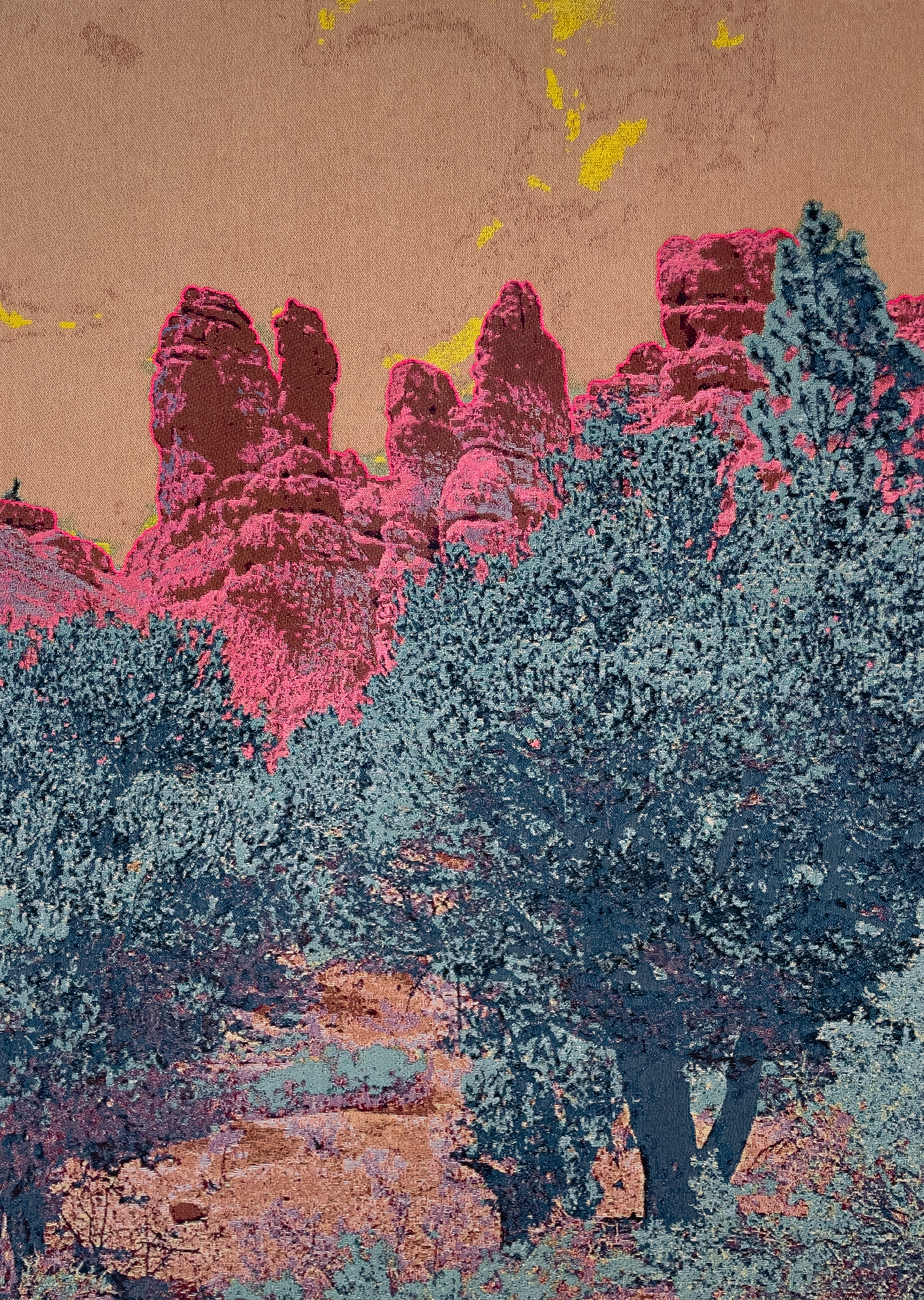
In this tapestry work, Bolster combines painting and textile. The image is a composite fantasy derived from images recorded in the region presently known as American South-West. Its epic, astonishing, and unearthly landscapes have been the inspiration for countless science fiction films, and the artist’s research trip there resulted in a series of related works and film pieces, post his (The Search for Extraterrestrial Intelligence Institute) SETI residency.
George Bolster
149.86cm x 200.66cm
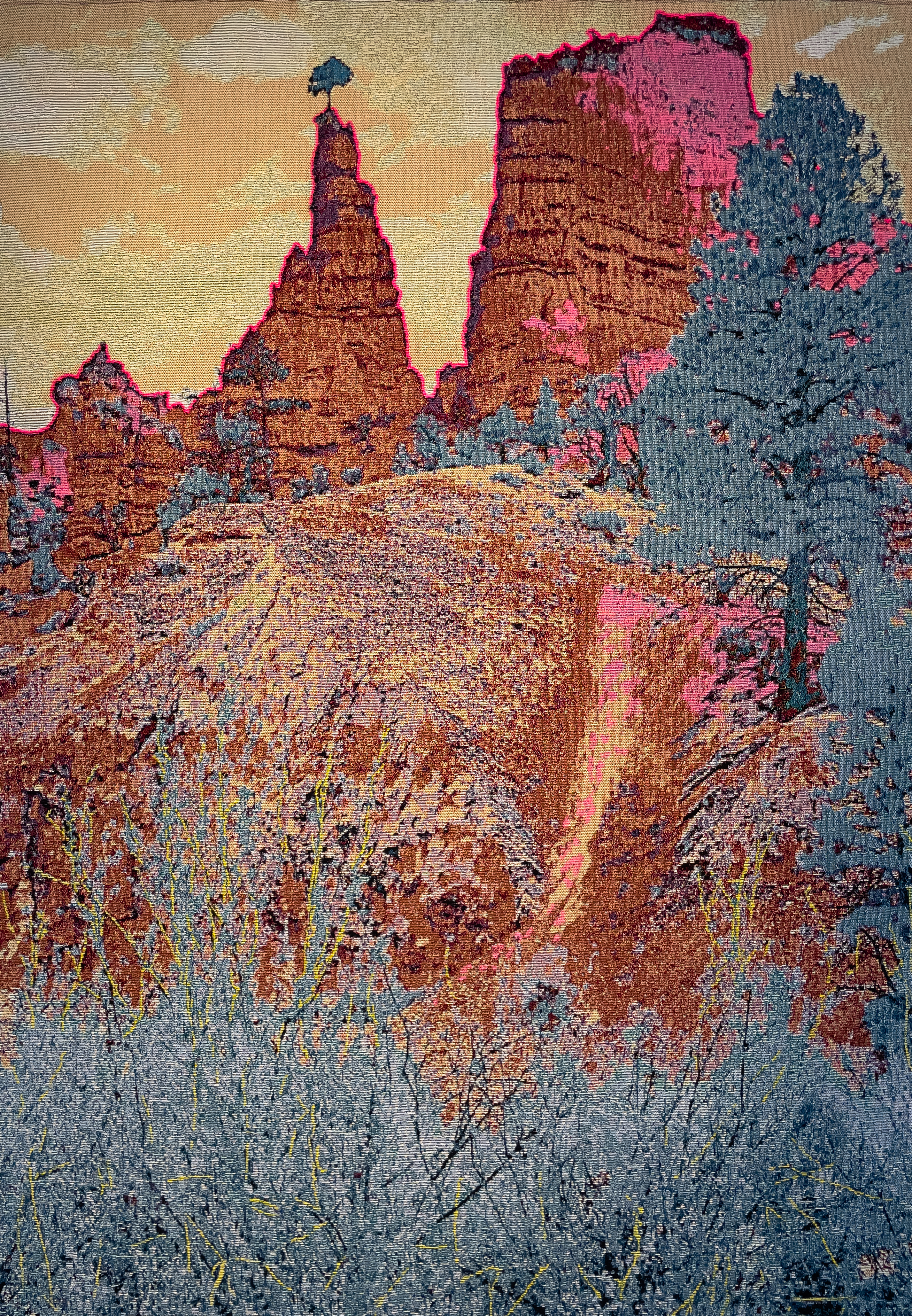
Proxima Centauri b is the closest exoplanet to Earth, and is four light years (38.9 trillion km) away from us. It is thought to have the right conditions to sustain life —not to hot and not to cold, referred to as being in the Goldilocks Zone— but the planet has massive exposure to ultraviolet radiation. The artist depicts it as speculative fiction, as it is impossible to see it, and all of the exoplanets in a detailed way with current technologies given the vast distances involved.
George Bolster
59 x 79 inches
We are living through two distinct revolutions in a very short time. First was the advent of the internet, and now we have Artificial Intelligence. The rapidity and lack of legislation regarding both has resulted in a series of unforeseen societal affects. The artist seeks to highlight the propensity for fraud in ideas and thinking, and the dangerous laziness the latter technology could inspire. Bolster laments the struggle implicit in a vocation like art, and wonders where this will end considering how short this species technological history actually is.
George Bolster
80 x 60 cm
George Bolster
59 x 79 inches
The surface of exoplanets is a subject of intense speculation and debate among scientists. They are found through a process of monitoring the light changes in front of different suns. So far, over 5,000 planets have been found. TRAPPIST 1 is an earthlike planet, confirmed to be rocky, but little else is known about the surface. Bolster proposes a speculative version, which until disproved could prove to be the case. These fantastical representations attempt to increase peoples interest in astronomy and the future, as it could look to our descendants.